
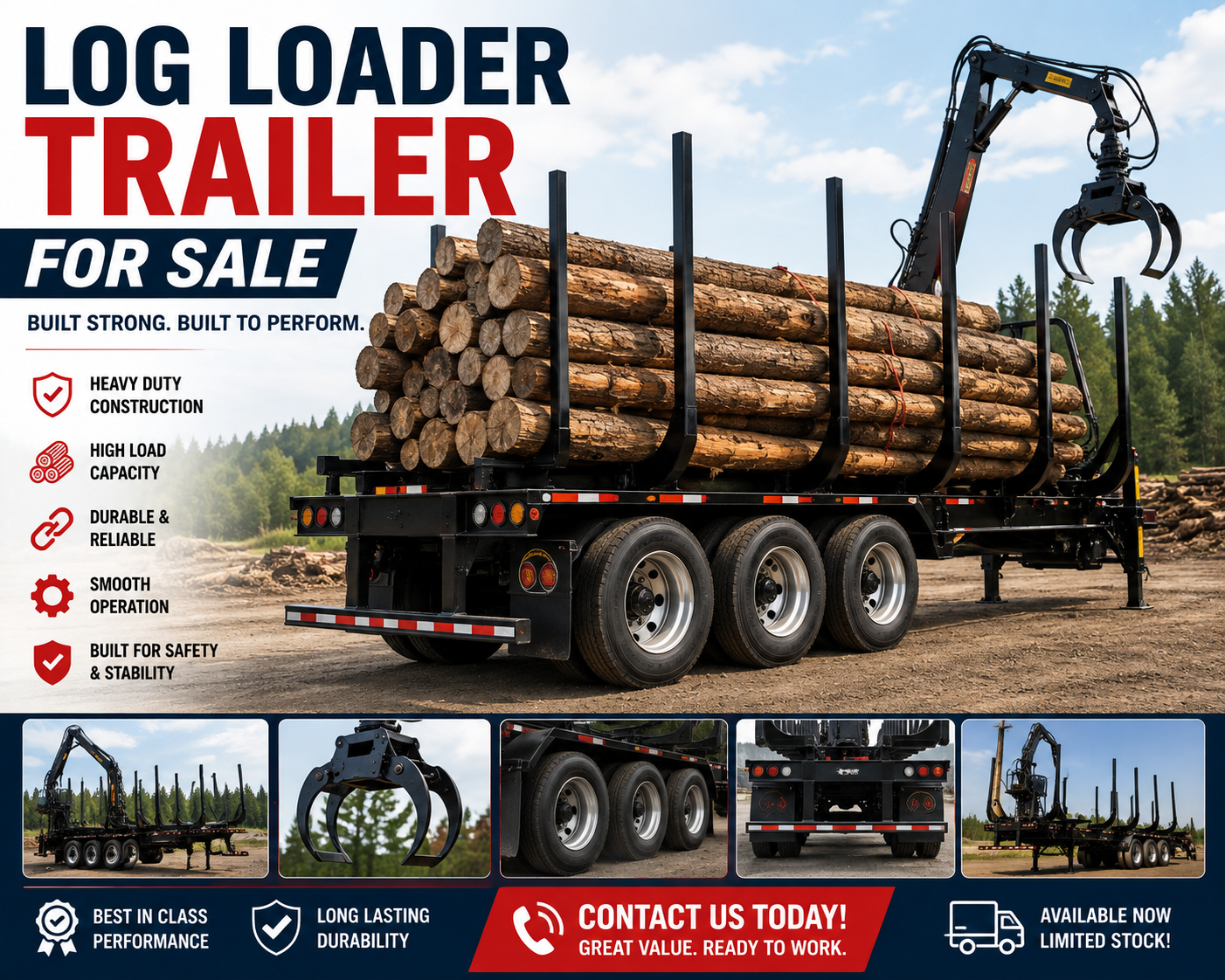
Log Loading Trailer: A Practical Guide to Efficient Timber Handling
Moving freshly cut timber from woodland to a processing or storage area can be one of the most demanding parts of forestry work. Logs are heavy, awkward to handle, and often located on rough or restricted terrain. A log loading trailer can simplify this process by combining timber transport with a practical loading setup. When properly matched to the workload, it can reduce manual handling, shorten collection cycles, and help operators maintain a more organized working area. Choosing suitable equipment, however, requires careful consideration of capacity, loading reach, stability, terrain, construction, and everyday operating needs.
Why Loading Capability Makes a Difference
A conventional timber trailer can transport logs effectively, but material still needs to be lifted onto it. This additional step can slow production when separate loading equipment is unavailable or inconvenient to position.
A log loading trailer provides a more integrated approach. Operators can collect timber and prepare loads without constantly moving between separate machines. This can be particularly useful in woodland where access is limited.
Efficient loading also helps reduce unnecessary dragging or repeated repositioning of logs before transportation.
Consider the Timber You Handle Most Often
Before choosing equipment, identify the dimensions of the logs normally collected. Diameter, length, weight, and shape can all influence loading requirements.
A log loading trailer should comfortably handle typical timber while leaving a sensible operating margin. Selecting equipment around occasional oversized logs can result in a setup that is unnecessarily large for everyday work.
Also consider whether the timber is straight and uniform or irregular. Crooked logs may require additional space and careful positioning during loading.
Match Capacity to Practical Requirements
Carrying capacity is important, but maximum capacity should not be the only factor considered. The towing equipment must also be capable of handling the loaded trailer under actual working conditions.
A log loading trailer carrying heavy timber behaves differently on firm ground than on mud, slopes, or loose woodland surfaces. Therefore, practical capacity depends partly on terrain and available traction.
Consider how much timber needs to move during a typical collection cycle. Efficient, manageable loads can sometimes provide better overall productivity than maximizing every trip.
Balance the Load Carefully
Correct weight distribution supports stable operation. Logs concentrated in one section can affect traction, steering, and trailer behavior.
As material is loaded, operators should position logs evenly whenever possible. A log loading trailer may experience changing weight distribution throughout the loading cycle, making careful placement particularly important.
Balanced loads also help make transportation more predictable over uneven ground.
Evaluate the Loading Arrangement
Loading performance can influence the efficiency of the entire forestry operation. Reach, lifting capability, control placement, and working position should suit the timber being handled.
When evaluating a log loading trailer, consider how easily logs can be collected from different positions around the equipment. Good reach can reduce the need to reposition the entire towing setup for every piece of timber.
However, reach should always be considered alongside stability. Extending a load away from the trailer can change how forces act on the equipment.
Think About Operator Visibility
The operator needs a clear view of both the timber and loading area. Poor visibility can make accurate positioning more difficult and slow the working cycle.
Controls should allow the operator to manage movements smoothly without adopting uncomfortable positions. A well-designed log loading trailer can help create a controlled loading routine that becomes easier with experience.
An organized loading zone can further improve visibility and efficiency.
Terrain and Access Need Careful Planning
Forestry sites frequently include narrow tracks, uneven ground, roots, slopes, and soft surfaces. These conditions should strongly influence equipment selection.
Ground clearance and overall width are particularly important. A log loading trailer must reach collection areas without repeatedly becoming restricted by obstacles or narrow access routes.
Turning space should also be considered. Long equipment combinations may require more room to maneuver, especially when carrying extended timber.
Plan Routes Before Loading
A route that is easy to navigate with an empty trailer may become more difficult with a full load. Before collection begins, operators should identify suitable travel paths and unloading areas.
Avoid unnecessary side slopes and obstacles whenever practical. Planning ahead can reduce reversing, difficult turns, and repeated repositioning.
Good route management can also reduce disturbance to the working area.
Stability Is Essential During Loading
Loading timber introduces forces that differ from normal transportation. As a log is lifted and moved, its weight can influence the balance of the complete setup.
A log loading trailer should be positioned on suitable ground before loading begins. Operators should understand how the equipment responds when lifting from different directions and distances.
Attempting to lift unsuitable material or working from unstable positions can create unnecessary risk.
Maintain a Clear Working Zone
People who are not involved in loading should remain away from the immediate operating area. Logs can swing, roll, or move unexpectedly during handling.
Branches and debris should also be cleared when they interfere with safe equipment movement. Maintaining an organized work zone helps operators concentrate on positioning timber accurately.
Inspect Construction and Wear Points
Forestry machinery regularly encounters vibration, moisture, dirt, impact, and substantial loads. Routine inspection is therefore important for dependable performance.
Check structural areas, connections, wheels, moving joints, hydraulic components, and other high-use sections of a log loading trailer. Signs of unusual movement, damage, or wear should receive attention before demanding work continues.
Cleaning equipment after heavy use can make these inspections easier.
Maintenance Protects Productivity
Preventive maintenance can reduce unexpected interruptions during busy periods. Lubrication points, moving components, hoses, connections, and fasteners should receive appropriate routine attention.
Loading components deserve particular care because they repeatedly operate under changing forces. Keeping the log loading trailer properly maintained supports smoother movement and more predictable operation.
Maintenance records can also help operators establish sensible inspection intervals based on actual use.
Create a Better Timber-Handling System
The most suitable log loading trailer is one that works effectively with the timber, terrain, towing equipment, and workflow already present. Capacity matters, but loading capability, stability, maneuverability, visibility, maintenance access, and load distribution are equally important. By evaluating these factors together, operators can create a more coordinated timber-handling process. A carefully selected setup can reduce unnecessary movement, improve collection efficiency, and support dependable forestry work from the cutting area to the final unloading point.