
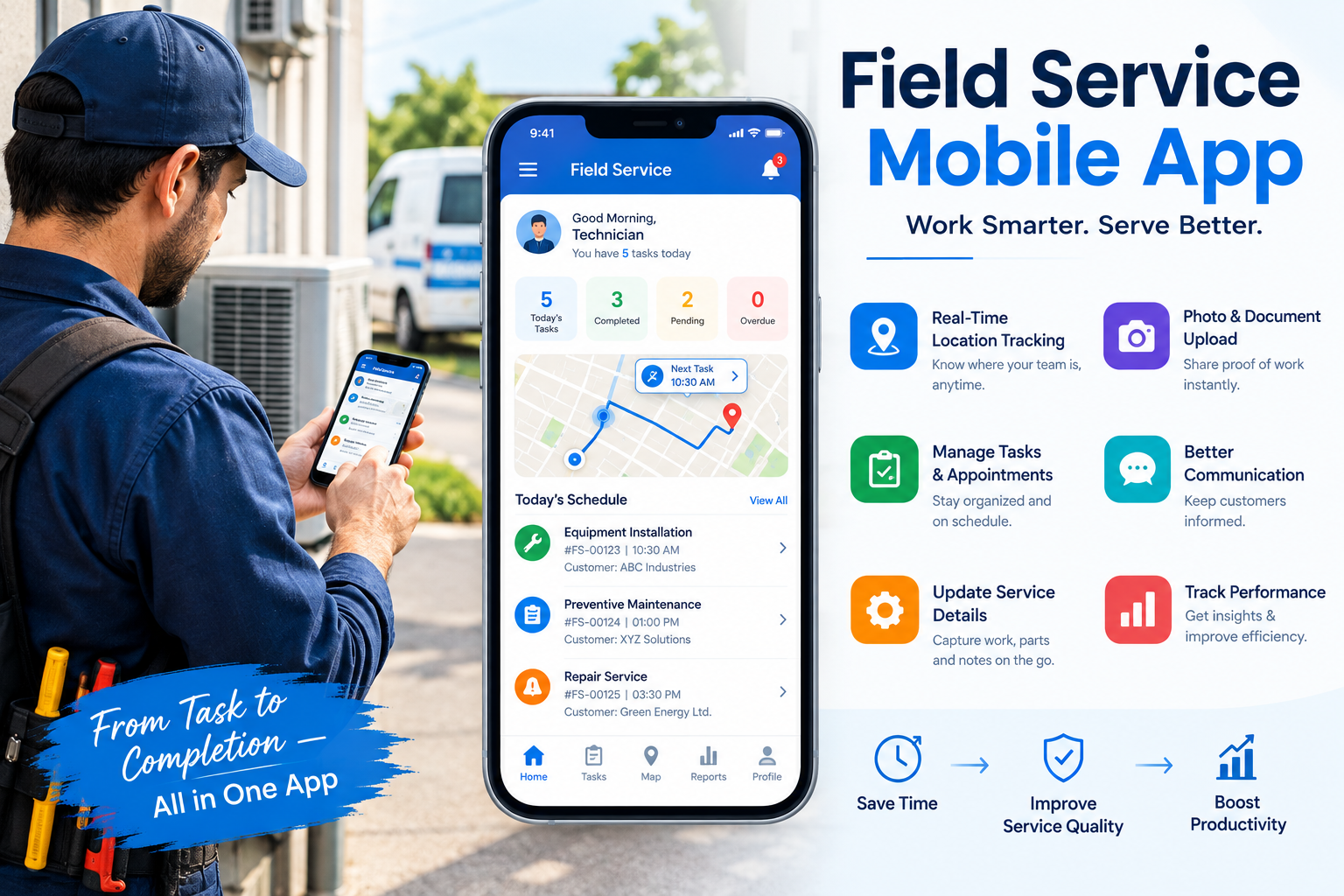
How a Field Service Mobile App Keeps Technicians Productive on the Move
Field technicians spend most of their working day away from a traditional office. They travel between customer locations, handle changing assignments, review job details, document completed work, and communicate with dispatchers. When important information is difficult to access, even simple tasks can become unnecessarily complicated.
A field service mobile app gives technicians convenient access to essential job information while they are working in the field. Rather than depending on printed paperwork, repeated phone calls, or information stored across separate systems, employees can manage daily activities through a more connected digital workflow.
For organizations with mobile workforces, this accessibility can improve productivity, communication, accuracy, and the overall quality of field operations.
Why Mobility Matters in Modern Field Service
Field work is naturally mobile. Technicians cannot remain connected to office-based processes throughout the day if those processes require them to return to a desk or constantly contact administrative teams.
They need information wherever the job takes them.
A field service mobile app can help bridge the gap between office teams and employees working at customer locations. It allows relevant operational information to move with the technician rather than remaining inside the office.
Give Technicians Information Before They Arrive
Preparation influences how smoothly an appointment progresses.
Before reaching a customer location, technicians may need to understand the reported issue, service history, appointment requirements, or specific job instructions. Arriving without this context can waste time and create an unprofessional experience.
Mobile access helps employees review available information before beginning the assignment.
Reduce Dependence on Paper-Based Processes
Paperwork has traditionally played a major role in field operations. Technicians may carry printed schedules, work orders, checklists, forms, and customer notes throughout the day.
However, paper documents are difficult to update once employees leave the office.
A field service mobile app can replace many manual processes with digital information that is easier to access and manage.
Capture Information at the Point of Service
Waiting until the end of the day to record job details can create problems.
Technicians may forget important information, lose handwritten notes, or spend additional time transferring records into another system.
Entering information while completing an assignment can improve accuracy and reduce duplicate administrative work.
This approach also allows job records to reflect field activity more quickly.
Keep Technicians Updated When Plans Change
A technician’s morning schedule may look very different by the afternoon.
A customer could cancel an appointment. An urgent request might need immediate attention. Another technician may become unavailable, requiring assignments to be redistributed.
Without an efficient communication method, these changes can create confusion.
A field service mobile app gives employees a practical way to receive updated job information while remaining in the field.
Minimize Repeated Calls to Dispatchers
Phone calls remain useful for complex situations, but they should not be required for every routine update.
When technicians can view schedules, appointment details, and changes digitally, they do not need to contact dispatchers repeatedly for basic information.
This saves time for both sides. Dispatchers can concentrate on coordinating the wider operation, while technicians can focus on completing assignments.
Support More Consistent Field Workflows
Different technicians may develop different ways of completing the same administrative tasks. While some flexibility is useful, excessive variation can make records inconsistent and difficult to review.
A field service mobile app can help organizations establish clearer workflows for common field activities.
Guide Employees Through Required Steps
Digital workflows can provide technicians with structured information about what needs to happen during an assignment.
For example, employees may need to review instructions, record observations, complete specific forms, document work performed, or update the job status.
A consistent process helps reduce the likelihood that important administrative steps are forgotten during a busy day.
Improve Communication Between Office and Field Teams
Effective field service requires constant coordination between people working in different locations.
Dispatchers need to know how assignments are progressing. Technicians need access to current information. Managers need reliable operational records.
Communication becomes inefficient when every update must pass through separate emails, calls, or handwritten documents.
A field service mobile app can create a more direct connection between field activity and office operations.
Create Better Visibility Into Job Progress
When job information is updated from the field, office teams can gain a clearer picture of current activity.
They may be able to determine whether an assignment has started, whether work is progressing, or whether additional attention is required.
Greater visibility can help teams respond to changing circumstances without interrupting technicians unnecessarily.
Help Technicians Deliver Better Customer Experiences
Customers expect field employees to arrive informed and prepared.
Repeatedly asking customers for information they have already provided can make the service process feel disconnected. Likewise, delays caused by missing job details can affect customer confidence.
A field service mobile app can provide technicians with relevant information before and during an appointment.
Make Every Visit Feel More Organized
Preparation creates a stronger impression.
When technicians understand the purpose of the visit and have access to relevant information, they can begin work more confidently.
Customers experience a smoother interaction, while technicians spend less time searching for information or contacting the office.
Reduce Administrative Work After the Job
Completing the technical work is often only part of a technician’s responsibility.
Employees may also need to record outcomes, document activities, complete forms, update statuses, and provide information for office teams.
If these tasks are postponed until later, technicians can face a large administrative workload at the end of the day.
Record Details While They Are Fresh
A field service mobile app allows information to be captured closer to the moment when work happens.
This can reduce reliance on memory and make documentation more complete.
It also minimizes the need to enter the same information multiple times across different records, helping technicians spend more time on productive field activities.
Build a More Connected Mobile Workforce
As field teams grow, communication and information management become increasingly important.
Processes that work for a handful of technicians may become difficult to maintain when dozens of employees operate across multiple locations.
Mobile technology provides a foundation for creating more scalable workflows.
Connect People, Information, and Daily Work
Successful field operations depend on technicians receiving accurate information at the right moment.
A field service mobile app can help connect schedules, job details, field updates, and administrative activities within the technician’s daily workflow.
That connection reduces unnecessary friction and makes it easier for employees to work independently without becoming disconnected from the wider organization.
Conclusion
Field technicians need more than technical expertise to work efficiently. They also need immediate access to accurate job information, schedule updates, customer details, and practical tools for documenting their work.
A field service mobile app brings these capabilities closer to the point where service actually happens. It can reduce dependence on paperwork, limit unnecessary calls, improve field documentation, and strengthen communication between technicians and office teams.
Most importantly, mobile access helps employees remain productive while moving between assignments. When technicians can access and update the information they need without returning to the office, field operations become more responsive, organized, and prepared for changing service demands.