Hybrid Power Systems Pakistan: Reliability & Sustainability
How Hybrid Power Systems Are Redefining Energy Reliability and Sustainability in Pakistan
Pakistan’s energy sector is experiencing a significant transformation as businesses, industries, and commercial facilities look for more reliable and cost-effective ways to meet their electricity needs. Rising energy expenses, power interruptions, and growing environmental concerns have encouraged organizations to explore alternative energy technologies. Among these solutions, hybrid power systems are gaining attention for their ability to combine multiple energy sources into one integrated setup.
Hybrid Power Systems Pakistan is an increasingly relevant topic for businesses seeking a balance between dependable electricity, operational efficiency, and long-term sustainability. By integrating technologies such as solar panels, battery storage, generators, and the national electricity grid, hybrid systems can provide a flexible approach to managing energy demand.
Unlike conventional power arrangements that depend on a single source, hybrid systems allow users to benefit from different technologies according to their requirements. This flexibility can help reduce dependence on grid electricity, improve backup power capabilities, and support more responsible energy consumption.
In this article, we explore how hybrid power systems work, why they matter in Pakistan, and how businesses can determine whether this technology is the right investment for their operations.
Understanding Hybrid Power Systems
A hybrid power system combines two or more electricity sources or technologies to deliver a more flexible and reliable energy supply. These systems are designed to coordinate different components so that electricity can be generated, stored, and distributed according to demand.
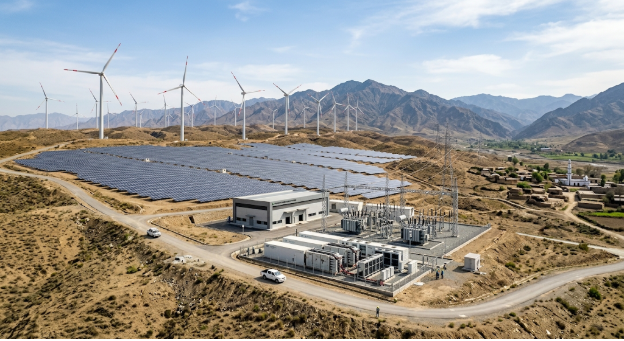
For example, a commercial facility may use solar panels to generate electricity during daylight hours, batteries to store surplus energy, and grid electricity or a generator when solar production is insufficient. A suitable control system manages these components to maintain a dependable supply.
The exact configuration depends on the property’s energy consumption, location, available infrastructure, and budget. Some installations prioritize renewable energy, while others focus on backup power and operational continuity.
Common Components of a Hybrid Power System
A hybrid installation may include several technologies working together:
- Solar panels: Generate electricity from sunlight and can reduce daytime grid consumption.
- Battery energy storage: Stores electricity for later use, subject to battery capacity and operating conditions.
- Diesel or gas generators: Provide backup electricity when other sources cannot meet demand.
- Grid connection: Supplies electricity when available and may support the overall energy strategy.
- Hybrid inverter: Converts and manages electrical power between compatible sources, batteries, and connected loads.
- Energy management system: Monitors consumption and coordinates the operation of different components.
Not every installation needs all these elements. Selecting the right combination is essential for achieving the desired performance without unnecessary expenditure.
Why Hybrid Power Systems Matter in Pakistan
Pakistan’s energy requirements vary considerably between residential communities, commercial buildings, agricultural operations, and industrial facilities. Businesses that require continuous electricity may face additional costs when interruptions affect production, customer service, or equipment performance.
A hybrid system can help address these challenges by introducing alternative sources of electricity and improving control over how energy is used. Instead of relying entirely on one supply method, users can develop a setup suited to their operational requirements.
1. Improving Electricity Reliability
Reliable electricity is essential for manufacturing plants, hospitals, offices, warehouses, data centers, and other facilities where interruptions can create significant problems.
A properly designed hybrid system can combine solar generation, batteries, grid electricity, and backup generators to reduce exposure to interruptions. For example, a battery may supply selected critical equipment when the grid fails, while a generator can provide longer-duration backup if required.
However, reliability depends on the system’s design. Battery capacity, generator availability, inverter specifications, and load priorities all influence how effectively a hybrid installation responds to an outage.
2. Managing Electricity Expenses
Energy costs are an important consideration for Pakistani businesses, particularly those operating energy-intensive equipment or using electricity throughout the day.
Solar generation can reduce the amount of electricity purchased from the grid when production coincides with consumption. Battery storage may help shift some energy use to different periods, depending on charging opportunities, system efficiency, tariffs, and operating requirements.
Nevertheless, savings are not automatic. Installation costs, maintenance, battery replacement, financing, and applicable electricity tariffs must be considered before determining whether a project is financially worthwhile.
Businesses should evaluate their actual electricity bills and consumption patterns rather than relying solely on estimated savings provided in general marketing materials.
3. Supporting Sustainable Energy Consumption
Environmental sustainability has become an important consideration for organizations planning their long-term energy strategies.
When a hybrid system incorporates solar or another renewable energy source, it can reduce dependence on electricity generated from fossil fuels. A solar-and-battery installation may also reduce generator operating hours when sufficient renewable electricity is available.
The environmental benefits depend on the technologies used and how the system operates. A hybrid installation that relies heavily on a diesel generator will have a different environmental impact from one that obtains most of its energy from renewable sources.
For organizations seeking to improve sustainability, measuring renewable electricity generation, fuel consumption, and emissions can provide a clearer picture of actual performance.
Types of Hybrid Power Systems Available
Hybrid systems are not limited to one specific configuration. Different combinations are suitable for different energy requirements.
Solar and Battery Hybrid Systems
Solar and battery systems combine photovoltaic panels with battery storage and an appropriate inverter. They can supply electricity during sunny periods and store surplus generation for later use.
This configuration may be suitable for offices, commercial buildings, educational institutions, and selected industrial facilities. When designed with backup functionality, it can also supply designated loads during grid interruptions.
Battery capacity should be selected according to the expected load and the duration for which backup is required. Heavy machinery and air-conditioning systems, for example, can require substantially more capacity than essential lighting and computer equipment.
Solar, Battery, and Generator Systems
This arrangement combines renewable energy, storage, and a fuel-powered generator. Solar panels can provide electricity when sunlight is available, while batteries help manage short-term fluctuations and support selected loads.
A generator can provide additional power during prolonged outages or periods of insufficient solar generation. The energy management system can be configured to coordinate these sources according to demand and operational priorities.
This type of arrangement may be useful for factories, remote facilities, agricultural operations, and businesses that need extended backup capabilities.
Grid-Connected Hybrid Systems
A grid-connected hybrid system works alongside the national electricity network. Depending on its configuration, it may use solar power, battery storage, and grid electricity to meet demand.
Its principal advantage is flexibility: the user can draw from available sources without necessarily operating a generator whenever solar production falls.
Grid-connected systems must comply with applicable electrical safety requirements, utility rules, and interconnection conditions. Exporting surplus electricity to the grid should never be assumed to be permitted or financially beneficial without checking the relevant arrangements.
Off-Grid Hybrid Systems
Off-grid systems operate without a continuous connection to the national electricity network. They often combine solar panels, batteries, and a generator to provide electricity in locations where grid access is unavailable or unreliable.
These systems require careful planning because they must meet demand using their own available resources. Designers need to account for seasonal solar variation, peak loads, battery autonomy, generator capacity, and the consequences of extended periods of poor weather.
An undersized off-grid installation can leave users without adequate electricity, while excessive oversizing can increase costs unnecessarily.
Key Benefits of Hybrid Power Systems for Pakistani Businesses
Hybrid energy technology offers several potential advantages when it is properly designed and matched to a facility’s needs.
Greater Control Over Energy Sources
Using multiple energy sources gives businesses more flexibility when conditions change. If solar production declines, the system may draw on batteries, grid electricity, or a generator, depending on its configuration.
This flexibility can be especially valuable for operations that cannot easily suspend their activities during electricity interruptions.
Reduced Generator Dependence
Generators can provide essential backup, but their operation involves fuel purchases, servicing, noise, and emissions.
A hybrid installation with sufficient solar generation and storage may reduce the number of hours a generator operates. The actual reduction depends on electricity demand, solar availability, battery capacity, and the system’s control settings.
Better Management of Critical Loads
Not every electrical appliance needs to operate during a power interruption. A hybrid system can be designed to prioritize essential equipment, such as security systems, communication devices, control panels, refrigeration, or selected production machinery.
Separating critical and noncritical loads can help control installation costs while maintaining the services that matter most.
Support for Long-Term Energy Planning
Hybrid systems can form part of a wider energy strategy that includes efficiency improvements, load monitoring, renewable generation, and backup planning.
Businesses that understand when and how they consume electricity are better positioned to identify waste, evaluate equipment upgrades, and make informed investment decisions.
How Hybrid Power Systems Support Different Industries
The practical value of hybrid energy depends on the needs of each industry.
Manufacturing and Industrial Facilities
Factories may use electricity for motors, compressors, pumps, production lines, ventilation, and control equipment. Interruptions can lead to lost production time and, in some cases, material waste.
A hybrid system can support selected critical processes and reduce grid consumption when renewable generation is available. However, industrial projects require detailed load assessments because large motors can create substantial starting currents and sudden power demands.
Agriculture and Irrigation
Agricultural operations may use electricity for water pumps, irrigation equipment, storage facilities, and processing machinery. Farms located far from dependable grid infrastructure may benefit from appropriately designed solar-based hybrid systems.
The system must reflect seasonal irrigation demand, available sunlight, pumping requirements, and the need for electricity outside daylight hours. In some applications, storing water in a reservoir during sunny periods can be more economical than storing all surplus electricity in batteries.
Commercial Buildings
Shopping centers, offices, hotels, and educational facilities require electricity for lighting, cooling, lifts, computers, and security systems.
Hybrid systems can help manage energy consumption and support selected services during interruptions. Commercial users should pay particular attention to air-conditioning demand, as cooling equipment can account for a substantial portion of electricity use in Pakistan’s warmer months.
Healthcare and Essential Services
Healthcare facilities depend on electricity for lighting, refrigeration, communication, diagnostic equipment, and other essential services.
A hybrid system may complement existing backup arrangements, but critical medical facilities require carefully engineered power continuity. Essential equipment should have appropriate backup, transfer arrangements, and testing procedures. A solar-and-battery system should not replace mandatory emergency power infrastructure without a qualified technical assessment.
Important Factors to Consider Before Installation
Although hybrid power systems can offer meaningful benefits, choosing the wrong configuration can increase costs and reduce performance. A structured assessment helps businesses avoid common mistakes.
1. Evaluate Your Electricity Consumption
Start by reviewing electricity bills, interval consumption data where available, and the equipment used throughout the day.
Identify peak demand, nighttime consumption, seasonal changes, and the loads that must remain operational during an outage. This information provides a practical foundation for system sizing.
2. Define Your Backup Requirements
Determine which equipment must continue operating when the grid is unavailable and how long it needs to run.
A facility that only needs to keep lights and computers operating for an hour will have different requirements from a factory that must maintain essential production equipment throughout a prolonged interruption.
3. Compare Equipment Quality
The performance of a hybrid system depends on the quality and compatibility of its components. Evaluate inverter specifications, battery chemistry, usable storage capacity, warranty conditions, protection systems, and local service availability.
A lower initial price may not represent the best long-term value if the equipment is difficult to maintain or unsuitable for the operating environment.
4. Calculate the Total Cost of Ownership
A reliable financial assessment should include installation, maintenance, replacement parts, battery degradation, generator fuel, financing costs, and expected electricity savings.
Businesses should compare realistic scenarios over the system’s expected life rather than judging a proposal solely by its advertised payback period.
5. Choose a Qualified Installation Partner
System design and installation require appropriate electrical expertise. Incorrect wiring, inadequate protection, poor grounding, and incompatible equipment can create serious safety risks.
Choose a provider that can assess the site, explain the proposed design, provide clear documentation, and offer a suitable maintenance plan. For larger industrial installations, request performance estimates and commissioning procedures before approving the project.
The Role of Energy Management Technology
Modern hybrid power systems can use monitoring software and automated controls to coordinate electricity generation, storage, and consumption.
These systems can monitor solar output, battery charge levels, grid availability, generator performance, and electricity demand. Based on configured priorities, the controls may decide when to charge batteries, when to use stored energy, and when additional generation is needed.
For example, a business may prioritize solar electricity during the day, reserve a portion of battery capacity for outages, and start a generator when the battery reaches a defined threshold. Such settings should reflect the business’s actual requirements and equipment limitations.
Monitoring also makes it easier to identify abnormal consumption, declining battery performance, and equipment faults. Over time, these insights can support better maintenance and more informed energy decisions.
Challenges and Limitations of Hybrid Power Systems
Hybrid energy technology is not a universal solution for every electricity problem. Several limitations need to be considered before making an investment.
Initial investment: Solar panels, batteries, inverters, protection equipment, and installation can require substantial upfront spending.
Weather variation: Solar generation changes with sunlight availability, seasonal conditions, shading, and panel performance.
Battery limitations: Batteries have finite storage capacity and gradually lose capacity with use and age. Their performance also depends on temperature and operating conditions.
Maintenance requirements: Inverters, generators, electrical connections, and battery systems require appropriate inspection and servicing.
System complexity: Integrating multiple sources requires compatible components, correct protection settings, and professional commissioning.
Regulatory requirements: Grid-connected systems must comply with the applicable rules and approvals. Electricity export, metering, and compensation arrangements can change, so current requirements should be verified before installation.
Understanding these limitations helps businesses set realistic expectations and select a system that can deliver practical value.
The Future of Hybrid Power Systems in Pakistan
Pakistan’s energy future will depend on several factors, including electricity demand, investment in infrastructure, renewable energy adoption, equipment costs, and regulatory developments.
Hybrid power systems can contribute to this transition by combining locally generated renewable electricity with storage and conventional backup resources. For commercial and industrial users, this approach can improve energy flexibility while supporting more deliberate management of electricity costs.
Advances in battery technology, monitoring software, and energy management systems may make hybrid installations more adaptable. Businesses may also benefit from combining energy generation with efficiency measures, such as improving insulation, upgrading motors, using efficient lighting, and optimizing operating schedules.
However, the success of future projects will depend on sound engineering and realistic financial planning rather than technology alone. Organizations that evaluate their requirements carefully and monitor system performance are more likely to achieve sustainable results.
Conclusion
Hybrid power systems offer Pakistani businesses a practical way to explore more reliable, flexible, and sustainable electricity solutions. By combining technologies such as solar panels, batteries, grid electricity, and generators, these installations can help manage energy demand and support essential operations.
The right solution depends on the facility’s electricity consumption, budget, location, backup requirements, and long-term goals. Careful system sizing, quality equipment, professional installation, and ongoing monitoring are essential for achieving the intended benefits.
For organizations researching Hybrid Power Systems Pakistan, the most effective starting point is a detailed energy assessment. Understanding actual consumption and operational priorities makes it easier to compare system configurations and determine whether a hybrid installation can deliver worthwhile long-term value.
Frequently Asked Questions (FAQs)
1. What are hybrid power systems in Pakistan?
Hybrid power systems in Pakistan combine two or more energy sources or technologies, such as solar panels, batteries, grid electricity, and generators. They help users manage electricity demand and may improve supply reliability when appropriately designed.
2. Are hybrid power systems suitable for Pakistani industries?
Yes. They can be suitable for manufacturing facilities, commercial buildings, agricultural operations, and other energy-intensive businesses. The most appropriate design depends on electricity demand, peak loads, backup requirements, and the availability of energy sources.
3. Can a hybrid power system work during a power outage?
Yes, if the system includes suitable backup functionality and has been configured to operate during an outage. Battery storage, an appropriately sized generator, and compatible inverter equipment can support selected loads. Not every grid-connected solar system can provide backup automatically.
4. Do hybrid power systems reduce electricity bills?
They can reduce electricity costs by using solar generation, managing stored energy, and potentially reducing generator fuel consumption. Actual savings depend on installation costs, electricity tariffs, usage patterns, system efficiency, and maintenance expenses.
5. What is the difference between a solar system and a hybrid power system?
A basic solar system generates electricity from sunlight. A hybrid system combines multiple sources or technologies, often including solar panels, batteries, grid electricity, or a generator. Its additional components can provide greater flexibility and, when properly configured, backup power.
6. How can a business choose the right hybrid power system?
A business should assess its electricity bills, peak demand, critical equipment, outage duration, available installation space, and budget. It should then consult a qualified energy professional to compare system designs, equipment quality, lifecycle costs, and applicable regulations.